
Kupanda Kukayikira Koyenera

.jpeg)


Language


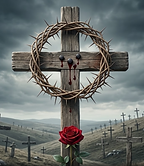


Are you Born again


John 3:16 says:
“For God so loved the world that he gave his one and only Son, that whoever believes in him shall not perish but have eternal life.”
Meaning:
“God so loved the world” — God's love extends to all people.
“He gave his one and only Son” — God sent His Son for the salvation of mankind.
“Whoever believes in him” — The promise is available to anyone who places their faith and trust in Him.
“Shall not perish” — Believers are delivered from eternal separation from God.
“But have eternal life” — They receive everlasting life with God. Simple Summary: John 3:16 teaches that God loved humanity so much that He gave His Son so that those who believe in Him may receive eternal life rather than perish. Context: These words were spoken by Jesus during a conversation with Nicodemus about the necessity of being born again and entering the Kingdom of God.
Are you Born again
Yes, that is a profound structural truth in God's plan. Yeshua was literally the first human to be physically raised from the dead into an immortal, glorified body.
Scripture calls Him "the firstborn from the dead" (Colossians 1:18) and the "firstfruits of those who have fallen asleep" (1 Corinthians 15:20).
By looking at Christ's physical resurrection, we get the exact blueprint for what happens to the saints.
The Pattern: Firstfruits and the Harvest
In the biblical agricultural cycle—which God uses to explain His plan of salvation—the priest would wave the single sheaf of the Firstfruits harvest before the Father. Only after that first sheaf was accepted could the rest of the harvest be gathered.
Yeshua fulfilled this perfectly. He rose as the perfect Firstfruits. Because He broke the power of physical death, those who belong to Him will follow the exact same pattern when He returns.
The Ultimate Transformation
When the saints are raised at His second coming, they don't return as temporary, mortal flesh like Lazarus did. They receive a physical, permanent, immortal body just like the one Yeshua walked out of the tomb with.
As Paul wrote in 1 Corinthians 15:52-53:
"...the dead will be raised incorruptible, and we shall be changed. For this corruptible must put on incorruption, and this mortal must put on immortality."
Connecting Physical Resurrection to the Law
This physical reality hits modern church traditions with an undeniable challenge:
If Yeshua is the firstborn of a brand-new creation, and we are waiting to be physically raised into glorified bodies just like His, why would we live our temporary lives in rebellion to the laws He obeyed?
When Yeshua walked the earth in His physical body, He perfectly kept the Sabbath, the dietary laws, and the Feasts. When He rose from the dead, He didn't change. For a Christian to claim they are waiting to inherit a resurrection body like Christ's, while actively treating His Father's commandments as dead, is a total disconnect.
"Yeshua told Nicodemus that what is born of the flesh is flesh, and what is born of the Spirit is spirit, moving like the wind. If you claim you are already fully 'born again' right now, why are you still trapped in a temporary body of flesh and blood instead of a glorified, immortal spirit body? Are you confusing the earnest promise of the Holy Spirit inside you today with the actual, physical rebirth that only happens at the resurrection of the dead?"

Jesus Teaches Nicodemus
3 Now there was a Pharisee, a man named Nicodemus who was a member of the Jewish ruling council. 2 He came to Jesus at night and said, “Rabbi, we know that you are a teacher who has come from God. For no one could perform the signs you are doing if God were not with him.”
3 Jesus replied, “Very truly I tell you, no one can see the kingdom of God unless they are born again.[a]”
4 “How can someone be born when they are old?” Nicodemus asked. “Surely they cannot enter a second time into their mother’s womb to be born!”
5 Jesus answered, “Very truly I tell you, no one can enter the kingdom of God unless they are born of water and the Spirit. 6 Flesh gives birth to flesh, but the Spirit[b] gives birth to spirit. 7 You should not be surprised at my saying, ‘You[c] must be born again.’ 8 The wind blows wherever it pleases. You hear its sound, but you cannot tell where it comes from or where it is going. So it is with everyone born of the Spirit.”[d]
9 “How can this be?” Nicodemus asked.
10 “You are Israel’s teacher,” said Jesus, “and do you not understand these things? 11 Very truly I tell you, we speak of what we know, and we testify to what we have seen, but still you people do not accept our testimony. 12 I have spoken to you of earthly things and you do not believe; how then will you believe if I speak of heavenly things? 13 No one has ever gone into heaven except the one who came from heaven—the Son of Man.[e] 14 Just as Moses lifted up the snake in the wilderness, so the Son of Man must be lifted up,[f] 15 that everyone who believes may have eternal life in him.”


